




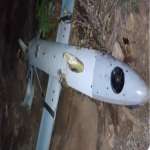
Southern Armed Forces Shoot Down Houthi Drone on the Airim Front in Al-Qabbaytah
The air defense units of the Southern Armed Forces successfully shot down a Houthi fixed-wing drone...




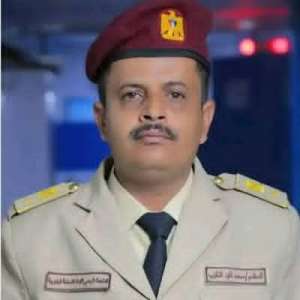
رفع المتحدث الرسمي باسم القوات المسلحة الجنوبية، المقدم محمد النقيب، برقية تهنئة باسم كافة منتسبي القوات المسلحة الجنوبية، إلى رئيس المجلس الانتقالي الجنوبي، القائد الأعلى للقوات المسلحة الجنوبية، عي...
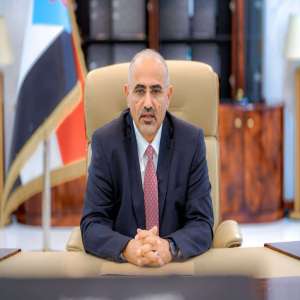
وجّه الرئيس القائد عيدروس قاسم الزُبيدي رئيس المجلس الانتقالي الجنوبي العربي، القائد الأعلى للقوات المسلحة الجنوبية، مساء اليوم، خطابا مهما إلى شعب الجنوب في الداخل والخارج، بمناسبة الذكرى الـ63 لثورة...
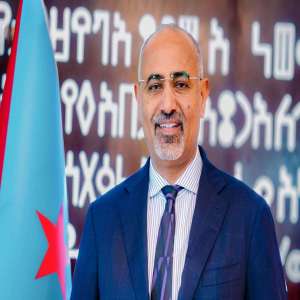
دعا الرئيس القائد عيدروس قاسم الزُبيدي، رئيس المجلس الانتقالي الجنوبي العربي، القائد الأعلى للقوات المسلحة الجنوبية، أبناء شعبنا الجنوبي العربي في الداخل والخارج إلى المشاركة الفاعلة في المليونية المر...
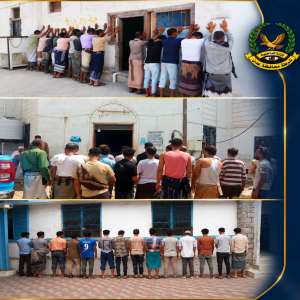
نفذت قوات الطوارئ والدعم الأمني التابعة لإدارة أمن العاصمة عدن صباح اليوم حملة أمنية موسعة شملت عددا من المديريات تضمنت تفتيش عدد من الأماكن المشتبه بها وأسفرت عن ضبط عدد من الأشخاص المشتبه بتورطهم في...
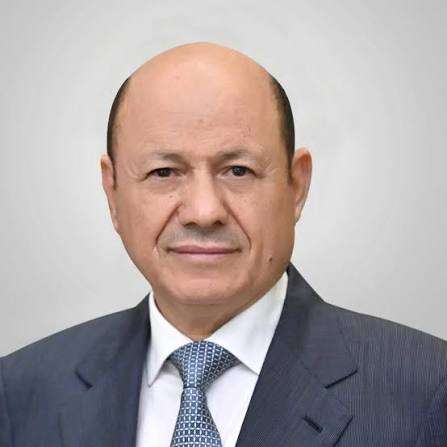
We do not know what has befallen the Chairman of the Presidential Leadership Council, Dr. Rashad Al-Alimi, but the rapid steps he has taken suggest that the man has been struck by a syndrome of unilateral decision-making. After abruptly suspending his colleagues in the council, he soon moved to strip them of their membership, only to surprise us again by appointing replacements—as though the Presidential Council were a private company, not a sovereign collective body.
Does Al-Alimi have this right? The decisive answer: No.
The power transfer agreement, born out of the Riyadh consultations in April 2022 and announced from the Saudi capital under the direct sponsorship of its leadership, does not grant the Chairman of the Council the authority to dismiss or replace any of its members unilaterally. The essence of the agreement rests on collective leadership and consensus, requiring unanimity or majority voting for critical decisions—not individual dominance.
The texts of the agreement and the formation decrees affirm: no unilateral authority.
Republican Decree No. (9) of 2022 stipulates that:
- The Chairman of the Council represents the state and commands the armed forces, but only in consultation with the Prime Minister and in consensus with the Council members.
- The composition of the Council is fixed and cannot be altered or tampered with except through political consensus or constitutional amendment.
- Decision-making is collective, with majority voting as the last resort when consensus cannot be reached.
Decree No. (119) of 2025 reaffirmed:
- The principle of collective leadership and shared responsibility.
- The rejection of any unilateral decisions affecting the structure or powers of the Council.
A dangerous precedent and a repetition of the “coup against agreements” scenario:
What Al-Alimi has done recalls the Amman Agreement between former presidents Ali Abdullah Saleh and Ali Salem Al-Beidh, brokered by the Hashemite Kingdom of Jordan under the late King Hussein bin Talal, only for Saleh to later renege, casting aside the commitments.
Today, the scene repeats itself—this time through Riyadh, under the auspices of the elder sister, which has remained unmoved in the face of this soft coup against an agreement it sponsored and embraced. What has occurred is not a mere administrative overreach, but a political coup against the spirit of the agreement and the principle of partnership.
It can only be accepted if the Council is redefined as a one-man authority rather than a collective body—contradicting everything agreed upon in Riyadh.
A Call to the Southern Masses:
Therefore, I call upon the proud southern people to reject these unilateral decisions, to take to the streets in mass popular demonstrations, and to express their categorical refusal of this political recklessness. The elder sister, the Kingdom of Saudi Arabia, must be compelled to shoulder its historic and moral responsibilities, and to put an end to Al-Alimi’s disregard and rebellion against the agreements signed under its sponsorship and on its soil.
The air defense units of the Southern Armed Forces successfully shot down a Houthi fixed-wing drone...
On August 1, 2026, the Chinese People’s Liberation Army will mark the 99th anniversary of its foundi...

President Aidarous Qassem Al-Zubaidi, President of the Southern Transitional Council (STC), Supreme...
Al-Dhale’a – His Excellency President Aidarous Qassem Al-Zubaidi, President of the Southern Transiti...